Chapter One — Hannah
Copyright © 2026 by Garrick Steva
All rights reserved.
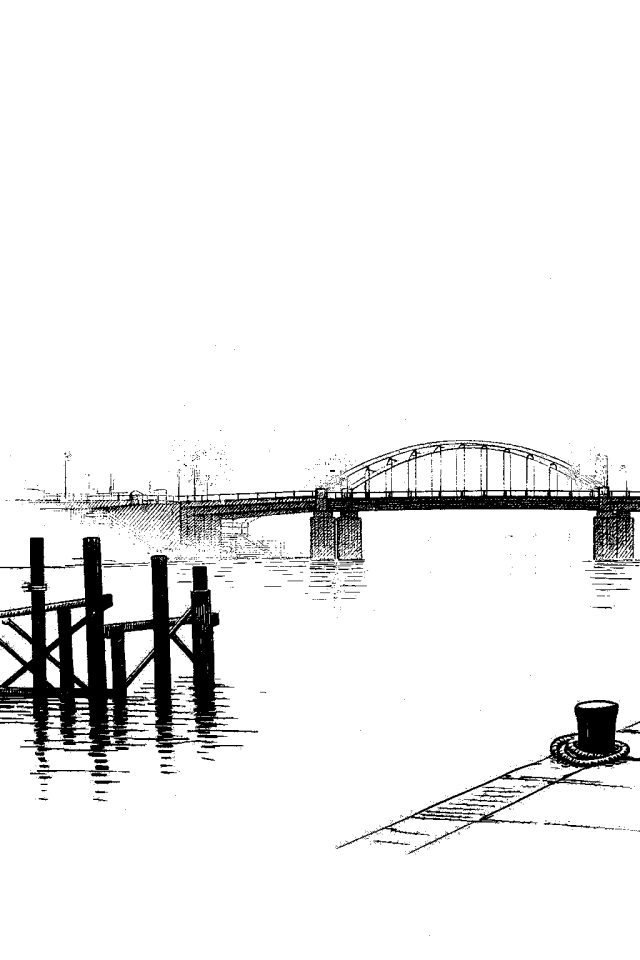
River patrol docks on the North Shore always smelled like a dog's last bath: dank river foam, diesel, and the morning shift's full-ashtray optimism. Even before sunrise, The Steel City glowed a sour sodium-orange under its own weather, which today was a sleet drizzle that turned your scalp to ice and stuck your hair to your skull. Hannah Robertson zipped her raincoat up to the jaw and told herself for the thirtieth time she didn't mind working the body beat, not even when the bodies came bloated and with their own tragic résumé.
The cops let her through the yellow tape, which flapped in the wind like a party streamer for the end of the world. Up ahead, two men from Freedom House Ambulance muscled a stretcher up the ramp from the Allegheny River, careful not to tip the corpse onto the rotting planks. The city had cut budgets again. No new dock boards since Kennedy. So every third step threatened to drop you into the water with the dead.
Lopez was there, already notebook-deep in official indifference, conferring with the paramedic, whose latex gloves were the only spot of color on the dock. Hannah's own gloves were wool, and as useless against the cold as a handshake with the mayor.
"Christ," said Lopez, seeing her camera, "you people don't waste time."
"Deadline's at ten," Hannah said. "He's not getting any less dead." She snapped a test shot of the stretcher, the flash painting the corpse in harsh blue. The lens steamed and she wiped it with the back of her hand, leaving a greasy smear. Lopez made a face.
The body was face-up, male, maybe forty, hair thinning and flesh already starting to drift off the jaw in white patches. The ambulance paramedic grunted and lifted the chin with two fingers. "Got some ligature here," he muttered. "See? Dark band, right under the beard."
Lopez leaned in, squinting against the rain. "That a cord or a wire?"
"Hard to say with the swelling. Maybe rope, maybe electrical." The tech let the head drop. "He's got blunt trauma, too. Back of the skull. Like somebody hit him after they tied him up."
Lopez took this in with the resigned sigh of a man whose night just got longer. "ID?"
The tech fished a thin wallet from the man's back pocket, holding it delicately. He thumbed through the contents, dropping a crumbling ten onto the dock and picking it up with a pinched look. "Edward Kozma," he read. "Employee badge. ACD Dispatch."
Hannah's brain lit up in a sequence of boxy fluorescent bulbs: ACD, the big overnight hauler out of Lawrenceville. She'd done an exposé on their union-busting last winter. Their graveyard dispatcher had called her once, left a rambling message about "something rotten in the yard," but she'd blown it off as union paranoia and hung up on him. Fuck.
Lopez paged through the badge and a stack of business cards, all waterlogged but legible. "No car keys?" He gestured to the corpse's pockets. The tech shook his head and fished out only a coin purse, a chewed pencil stub, and a Greyhound ticket with the stub still attached.
"Guy was set for Cleveland, seven AM," the tech said, holding up the ticket.
Hannah's eyes stuck to the ticket, which looked suspiciously dry. The rest of the wallet was pulp, every bill stained and soft, but the ticket was crisp as if just plucked from the station window. She focused on the ticket for a long moment, then quietly snapped a close-up, the edges sharp and the punch code visible in her lens. It was the kind of detail worth remembering; she resolved to file the photograph if it became important. She made a mental note to steal it if Lopez didn't bag it for evidence. Nobody floats in the Allegheny with a dry ticket unless they never meant to ride the bus.
"What time did he go in?" she asked, focusing the camera for a close-up of the face.
"Impossible to say. Water's cold, slows everything down," said the tech. "Cold water makes it tricky. Could be anywhere from twelve to thirty hours."
He shrugged. "Krieger'll pin it down at the morgue."
Lopez grunted, already bored. "You got your shot, Robertson?"
She kept snapping anyway, working the dock from every angle. Blood had pooled behind the man's left ear, crusted dark against the scalp. She noticed his hands: calloused, nail beds black with dirt or grease, but the knuckles unbruised. "No sign of a fight," she said. "Looks like he just took it."
"Or was drugged," said the tech, scribbling a note. "I'll run tox, but don't hold your breath."
"Where's his car?" she asked, turning to Lopez.
"Nothing in the lot. Maybe he got dropped off." He gave the body a long, blank stare. "Or maybe somebody wanted it to look like a river suicide."
Hannah snorted. "Yeah, all the best suicides tie their own hands first." She waited for Lopez to snap back, but he just shrugged and gestured for the paramedic to bag the body.
"Get him to the morgue," Lopez said. "I want a full workup. And call me when you have cause of death, not before."
The tech zipped the body with a practiced yank, pausing only to slide the wallet into an evidence bag. Hannah got a final shot of the face before the zipper closed, noting the slack jaw and the way the left eyelid didn't quite cover the eyeball. She'd seen hundreds of corpses, but this one looked what? Expectant? Like it had something to say, if you just waited for the last twitch.
As the stretcher disappeared into the back of the van, Hannah trailed after Lopez, who was already lighting a damp cigarette under the lee of a steel piling. He offered her one, but she waved it off.
"Anything you're not telling me?" she asked, pulling out her notepad.
He glanced at her, eyes hooded. "Just another stiff in the Allegheny. Off the record, you ask me, he pissed off somebody who didn't like being recorded. Maybe a union thing, maybe not. City's full of people who want to see you sleep with the fishes."
She jotted it down, knowing he'd deny it in print. "You find anything else on him?"
Lopez flicked ash onto the dock and hesitated. "There was a matchbook in his jacket. The Anchor, down on Smallman. You know it?"
"Never been," she lied, picturing the place instantly. Smoky union bar, busted jukebox, the kind of clientele that never gave their real names.
He handed her the matchbook, sealed in a little bag. She pressed it between her gloved fingers—three matches missing, the inside cover scribbled with a time and date: "H.R.—Thurs 2AM—urgent." Her initials. It sucked the breath right out of her.
"You okay?" Lopez asked, catching the sudden silence.
"Fine," she snapped, handing the bag back before he could notice the way her fingers shook. No way he knew what those letters meant. No way Kozma tried to call her the night he died. Right?
She turned away, staring at the city across the river. The steel mills belched smoke over the bridges, neon beer signs flickered in the dawn, and somewhere in the haze a train wailed its arrival to a city that would keep moving even if every body in the Allegheny told its story.
As she walked back to her car, Hannah's hand found the matchbook again, and for the first time in months, she felt something like fear. Not of the river, or even of the men who sent bodies to it. It was of the stories she'd missed, and the debts they'd come to collect.
She jotted a quick note in her pad: Dry Greyhound ticket, stub attached, Cleveland. Photograph on film.
~
She drove in second gear through the Strip, the sun not yet up, and the only company was the bakery's sour waft and the odd set of headlights from a dray truck lumbering past. She didn't head straight for the Press, or even toward her usual greasy spoon. Instead she parked under a blown-out streetlamp, rolled down her window for a smoke, and stared at the matchbook in her lap. The city was a bruise in the pre-dawn, the river still moving beneath the surface, the story already metastasizing in her head.
She popped her trunk and did her own evidence collection. The Anchor's matchbook was a cheap red one, cellophane torn at the corner, the sulfur heads worn flat from some obsessive finger. Inside, the handwriting: H.R.—Thurs 2AM—urgent. Her own initials, block-printed in a hand that wanted to be forgotten. Thurs was tonight. Two A.M. was now only hours away.
"Hey," someone called from the curb. It was the paramedic, hauling his own gear back to the van. He looked less like a scientist and more like a janitor who lost the mop war. "You're the reporter, right?"
"Yeah. Press."
He squinted at her, then at the matchbook in her hand. "Don't suppose you knew Kozma? He tried to reach your paper yesterday. Said he needed the girl who did the strike stories. My sister reads your stuff; she likes the labor beat."
She flinched, which was not professional, and ground out her cigarette with a force that snapped the filter. "We get a lot of calls," she lied, hearing her own voice wobble. "Most don't pan out."
He shrugged, already bored. "Just thought you'd want to know." Then he trundled back to the van, never glancing at the body he'd just zipped.
She sat in the Beetle for a long time after that, running through the tape in her head. The message light on her office phone, blinking red and angry. Eddie's voice, soft and shaky: "You don't know me. It's about the yard; someone's in real trouble. You did the stories about the janitor's wildcat, right? Call me, please." Her voice dropped, becoming a whisper. "Someone higher up is in on it. Not just the foreman. Maybe city hall, I don't know. Just call me." She had deleted it three nights ago, an after-hours ramble from a man who couldn't find the words. Now he never would.
How many other bodies float past because you're too busy to listen?
She pressed the matchbook until her knuckles blanched, then snapped it shut and stuffed it in her camera bag. She replayed the shot she’d taken of the Greyhound ticket, impossibly dry, as if the universe wanted to be sure she noticed it. She wondered who Kozma thought he was meeting in Cleveland, or if that was just the destination someone chose for his last ride.
She wrote the time and address for The Anchor on the back of an old press pass, then tore the matchbook in half to keep the note separate from the evidence. It felt stupidly melodramatic, like something out of a detective serial. Next you'll be monologuing into a tape recorder, lady. She allowed the smallest smile to curl her lips.
When she finally started the car, the engine coughed and shook before settling into its little blue rattle. She didn't drive toward home, or the Press. She pointed the nose toward Smallman, toward the bar where dead men left messages and reporters got their second chances.
She was still forty-eight hours from her first real byline, but the city was already closing in, heavy as water and twice as cold.